Do you need climate-controlled storage in Dallas?
Dallas averages about 106 days a year at 90°F or hotter. Here is what that means for stored belongings, what climate control costs, and what to ask first.
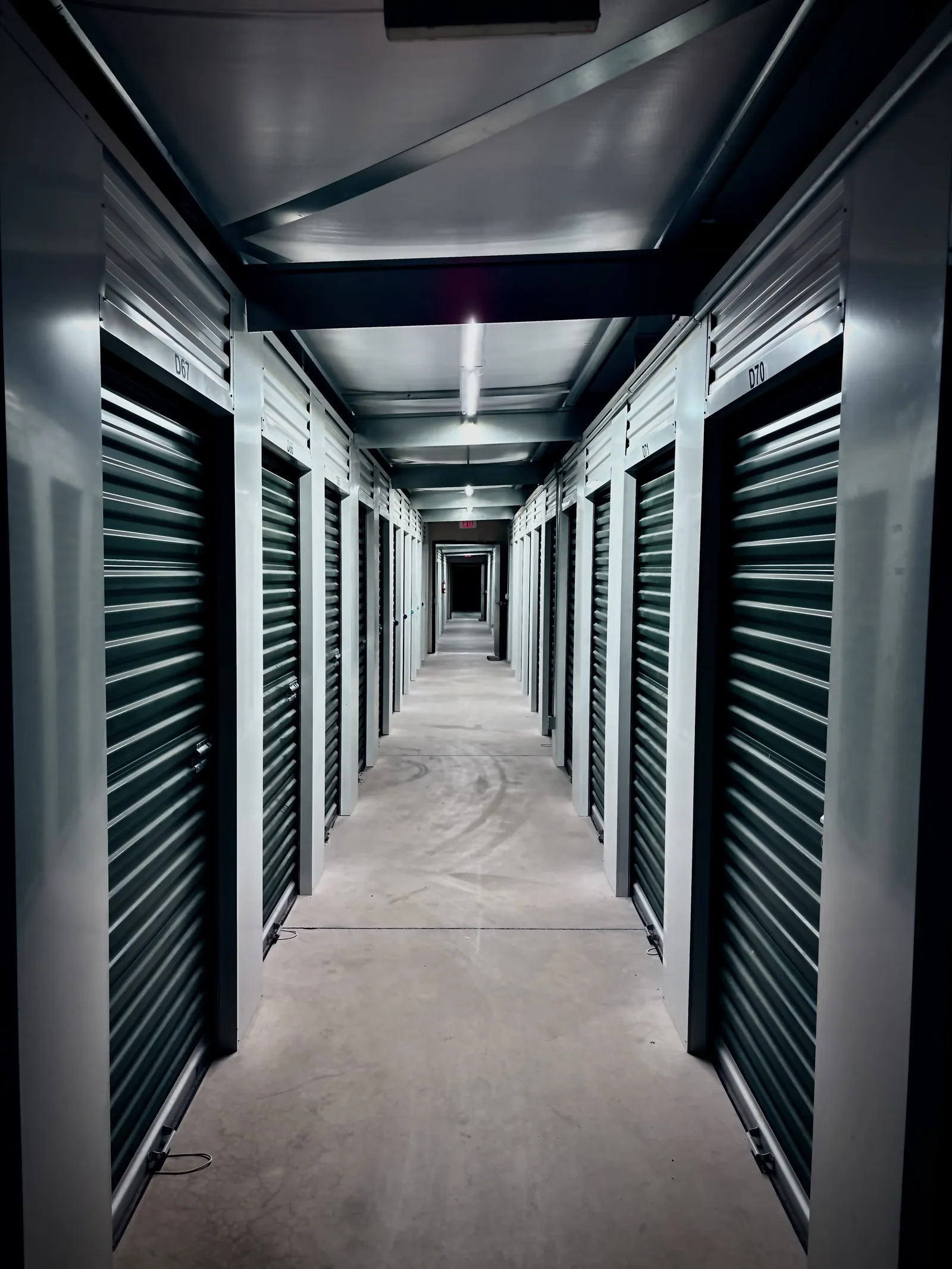
- At DFW Airport, normal daily highs reach 95.6°F in July and 95.8°F in August, with about 106 days a year at 90°F or above and 20 at 100°F or above (NOAA 1991–2020 normals).
- The Library of Congress recommends storing photographs at 70°F or below and 30–50% relative humidity, kept stable. Dallas normal highs are above 70°F from April through October.
- "Climate-controlled" has no standard meaning. Ask what temperature and humidity range the facility actually maintains.
- In one Dallas listing snapshot, a climate-controlled 10x10 averaged about $160 a month against $124 without climate control.
Climate control is usually the biggest single add-on to a Dallas storage quote. Whether it is worth paying for comes down to three things: how hot Dallas gets, how sensitive your belongings are, and what the facility actually delivers.
How hot does Dallas get?
NOAA’s 1991–2020 climate normals for Dallas–Fort Worth International Airport:[1]
- Days at 90°F or above
- ≈106 a yearmostly June to September
- Days at 100°F or above
- ≈20 a yearmostly July and August
- Normal high, August
- 95.8°F
- Nights at 32°F or below
- ≈29 a yearmostly December to February
| Month | Normal high | Normal low | Days ≥ 90°F | Days ≥ 100°F |
|---|---|---|---|---|
| April | 76.1°F | 55.2°F | 0.7 | 0.0 |
| May | 83.6°F | 64.5°F | 6.9 | 0.1 |
| June | 91.5°F | 72.2°F | 22.3 | 1.6 |
| July | 95.6°F | 75.8°F | 28.7 | 7.4 |
| August | 95.8°F | 75.7°F | 27.6 | 9.7 |
| September | 88.6°F | 68.5°F | 16.2 | 1.4 |
| October | 78.4°F | 57.1°F | 3.6 | 0.0 |
These are outdoor air temperatures at one airport weather station. We have not found published measurements of temperatures inside Dallas storage units, so we don’t estimate them. Treat the outdoor numbers as context, not as what your unit will reach.
Which belongings are most at risk?
The clearest published guidance we have found is for photographs. The Library of Congress recommends “a relatively dry (30–50% relative humidity (RH)), cool (70°F or below), and stable environment”. It advises against storage in attics and other places “with high risk for condensation, water leaks, and extreme environmental fluctuations”. It also says RH should ideally vary by less than 5% within 24 hours.[2]
From April through October, Dallas normal daily highs are above that 70°F guideline.[1] If you’re storing photo albums, prints or negatives for more than a few weeks of the warm season, climate control is the cautious choice. That is our judgment, based on the two sources above.
For other things, such as wood furniture, musical instruments, electronics, mattresses, wine or medication, look up the manufacturer’s storage temperature range and compare it with the table. We don’t publish item-by-item rules without a source to back them.
What does “climate-controlled” actually mean?
There is no industry-wide standard. Public Storage’s own site says: “Temperature and humidity levels within any storage space including climate-controlled spaces may vary. Please inspect any unit before renting.”[3]
Before paying the premium, ask:
- What temperature range is maintained, in summer and in winter?
- Is humidity controlled, or only temperature?
- Is the unit indoors off a hallway (as in the photo above) or a drive-up unit with its door to the outside?
- What happens during a power or HVAC outage, and how quickly is it fixed?
What does climate control cost in Dallas?
On 22 October 2026, RentCafe’s Dallas page listed an average of about $160 a month for a climate-controlled 10x10 and $124 for a non-climate 10x10, about 29% more by our arithmetic.[4] Public Storage’s Dallas page listed an average “Climate Controlled” price of $76 across unit sizes.[5] Because that figure mixes sizes, it can’t be compared directly with the size-specific numbers.
The premium only makes sense against the value of what’s at risk. Use the calculator to put a climate-controlled quote next to a standard one over your planned stay.
Cheaper ways to reduce heat risk
- Keep the most sensitive items (photos, documents) at home and store the bulky, tolerant items.
- If you only need storage over winter, the heat question mostly goes away. October through April is far milder (see the table).
- If photographs must go into uncontrolled storage, don’t put them in plastic sleeves. The Library of Congress says emulsions “may stick to plastic enclosures if they are exposed to high RH, especially above 70% RH, so they should not be used in uncontrolled storage environments.”[2]
Questions people ask
Is climate-controlled storage worth it in Dallas?
It depends on what you store and for how long. Dallas summers are long and hot (about 106 days a year at 90°F or above at DFW). Photographs, documents and other heat- or humidity-sensitive items are the main candidates. Furniture and tools in sealed boxes for a short summer-free stay may not need it. Check each item's own storage temperature guidance.
What temperature are climate-controlled units kept at?
There is no single standard. Public Storage's site warns that temperature and humidity in any unit, including climate-controlled ones, may vary. Ask the facility for the range it maintains and whether humidity is controlled.
Do I need climate control in a Dallas winter?
Freezes are less common than heat. DFW averages about 29 nights a year at or below 32°F, mostly December to February. Items that should not freeze, such as liquids, are worth thinking about.
Sources
- U.S. Climate Normals 1991–2020, monthly: Dallas–Fort Worth International Airport (USW00003927). NOAA National Centers for Environmental Information.
- Care, Handling, and Storage of Photographs. Library of Congress.
- Public Storage website promotion and unit disclaimer. Public Storage.
- RentCafe: storage units in Dallas, TX. RentCafe.
- Public Storage: storage units in Dallas, TX (prices page). Public Storage.
Related
- What Dallas storage units really cost
Advertised Dallas storage prices are move-in rates. Here is what operators list, what one large operator reports tenants actually pay, and why.
- Before you sign a Dallas storage lease
Twelve questions to ask a Dallas storage facility before you sign, each tied to a cost, a contract term or a Texas law that affects you.
- Car, RV and boat storage in Dallas
How to choose vehicle storage in Dallas, from an outdoor space to an enclosed unit or indoor car club, which unit size fits, and Texas lien rules for vehicles.
- True-cost calculator
Compare up to three quotes including fees, promotions and rent increases.